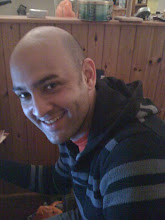
Today was a bad day. All the work I've done over the past few months was undone in an instant. Started off the day with a bad phonecall; an angry customer requesting...something - I was too blinded by anger to give a damn about what she was saying. It's funny how we let other people dictate how we feel when, in fact, we should be dictating how we feel. It's strange...
Tuesday, 27 May 2008


Monday, 26 May 2008
Day of the Dead (29): Blood-soaked Streets
So the government goons bumped off another MDC activist. It just seems like this type of event is all too common in Zimbabwe - ten to fifteen masked men show up at your doorstep chanting government war cries, you're thrown into the back of a pickup truck, or similar vehicle (they dare not use the characteristically ZRP-esque Santana's [Land Rover's], lest they be identified as closely tied to the security forces who'd sworn to protect the citizens of Zimbabwe no matter what), and you're never seen again - whisked off into oblivion - with a good dollop of pain thrown in.
 El Día de los Muertos (The Day of the Dead) is a holiday celibrated on the 1st and 2nd of November in Mexico and certain parts of the US and Canada. It's original function was to honour the ancestors. Looks like every day is a Day of the Dead in Zimbabwe, only nobody is celebrating - people are just dying - and there is most certainly no honour involved. I was reading an article about how an MDC activist was murdered after being taken away by ten men. This man's brother made a valid point when he said 'They are cowards, all of them. Ten men to take down one unarmed man' (BBC Website, 23 May 2008). Certainly, there is no honour between enemies in Zimbabwe, and the situation is only getting worse.
The streets are becoming more and more blood-soaked every day, and nobody cares.
Friday, 23 May 2008
Day 26: Virtual Hunters
With online dating becoming more and more socially acceptable, I thought I'd give it a go. It is, after all a good way to weed out all the relatively uninteresting women out there (and, as I've recently found out, there are HORDES of them - lifeless zombies who take pleasure in actively draining the dating world of all their interesting thoughts). Yes, I said it! Everyone was thinking it - why would you put yourself on the line and ask someone on a date in real life (which in itself is nerve-wrecking), knowing little or nothing about them, only to find out on the actual date that you'd rather be out with that donkey from Winnie the Pooh? Why? No, you wouldn't - you'd much rather find some common ground with a potential partner, and find out more about them, without going through the pure agony of sitting through drinks with death herself.
I was lucky during my brief stint of online dating; all the dates I went on were quite interesting (yes, all two of them) and even though they amounted to nothing, were good (if expensive) nights out. Let's face it though, there's still somewhat of a stigma attached to online daters; there's something still taboo about it, and I felt the pinch of this stigma when I first started - the secrecy, dodging the questions, the lies about how you actually got that date. I think I spent more time and energy covering up my self-conspiracy to enter the world of internet dating than I spent on actively dating online. No doubt a large portion of the stigma that comes with online d
 ating boils down to one, simple thing - being seen as unable to perform in terms of inter-sex (or intra-sex for some of you) relations in the 'real world'.
As men, we more often than not have to live up to the poor peripheral vision, blood-thirsty, go-getting hunter conception. And if we can't live up to the historical conception that all men are hunters by instinct then we're seen as weak, and not worthy of a second glance. That's why I think online dating is particularly difficult for men to admit having taken part in, because admitting it would raise questions about our sexual prowess. I know I've been guilty on many occasions of asking these questions in my own mind about other people. But I think some men are just not able to approach women face to face and ask them out, while others still prefer online dating because of the ability to screen potential partners before going any further. There are a number of reasons for online dating, a lot of which have absolutely nothing to do with a persons sexual prowess or lack thereof.
Now, don't get me wrong, I'm not saying that women should more easily be able to admit taking part in online dating. I just think that there's more pressure on women to get married so it's a lot more acceptable for them to indulge in this kind of thing. God, I curse the year Bridgette Jones' Diary came out - now practically every woman over the age of 22 and not in a relationship thinks she's going to end up a Bridgette Jones. The number of online profiles I've seen saying exactly or a variation of the following: "I don't want to end up like Bridgette Jones", or "Bridgette Jones here, come and save me". But I suppose there's a biological reason behind their haste - after all a woman's biological clock starts slowing down after about the age of 35, and bearing children becomes more dangerous the older they get. The point is that the perceived reasons behind a person's choice to date online makes it a lot more socially acceptable for women than it is for men and that, I think, is just unfair.
So, why did I do it? Primarily because I was starting a life in a new country and I didn't know anyone (despite what we all see in the movies, it's difficult to approach an absolute stranger and ask them out on a date without getting mace in your eyes; more often than not relationships start with people you already know or through people you already know), and I'm going to continue doing it because it is, after all, about living life and meeting new people, some of whom you may have a connection with some of whom you may not. Just one piece of advice (for both men and women) from my experience - don't take it too seriously and don't expect to find your one true soul mate, even though that may happen actually expecting it would just set you up for disappointment every time it doesn't happen and make your dates boring. Have fun with it, and don't be afraid of it...half the time nobody cares that you're internet dating, partly because it's more socially acceptable but mainly because chances are they've considered it themselves.
Monday, 12 May 2008
Day 15: Reflexivity II - The Prison Within
Look, I'm going to get more serious now, because I believe that I'm in a transitional phase of my life and have been within this phase for a few years now (I know...long phase). I want to be free from myself, from my own prison, from my own personal hell - a hell which is lorded over by the ultimate, almost unconquerable, gaoler - the 'I', 'me', 'myself' - the Ego. There are many pieces of literature detailing the Ego and it's persuasion towards imprisonment of the mind. Everything we do, no matter how banal, is a testament to the power of the Ego.
Let's face it, from our early childhood years, we are primed to be imprisoned by our own Ego's - especially in this modern world where image is such an all important thing that it chokes the soul and bleeds it dry. Let me pose the following question: next to self-preservation (and this includes procreation), what is the one overriding urge common amongst all of us? Not much of a question, because I think it's a lot more rhetorical in its nature - it's a question everyone knows the answer to, although many may be afraid to admit it. The one overriding concern common amongst all human beings is the urge to be accepted and liked. Basic, isn't it? Being accepted or, at least, being able to perceive that you are accepted is possibly the most important driving force behind an individuals actions, and behind this driving force is the Ego.
People go to great lengths to gain acceptance (or perceived acceptance); their energies wasted on relatively fruitless activities. People push themselves to the brink of death on ridiculous diets, go under the knife in dangerous procedures and get involved in stupid antics just to satisfy the Ego. And I'm going to tell you the worst part - society not only allows this, but actively encourages it. Society, with it's beauty magazines, advertisements and various pressures pushing us to give in to our Ego's and be beautiful, cover our faces with make-up laid on so thickly it's like Siberia in the winter; masking every single little blemish - masking our souls.
Am I the only one who thinks this is sick? We have become worse than animals in this world. Animals have no rise to rational thought and do not engage in these seemingly savage activities. They do not diet, do not push each other towards spirals of uncontrolability and do not put pressure on one another to change. The Ego is, then, inextricably linked with our capacities for rational thought, and yet it is an irrational beast - stopping at nothing to get it's fix of acceptance, pushing us ever closer to the edge over which we will soon peek and be thrust into oblivion by ourselves.
It seems like rational thought is a double-edged sword; giving us the ability to reason, to think on a level other creatures would only dream of, but burdening us with this prison; the Ego in all it's infinite stupidity. I feel the need to rid myself of this burden; to let go of my Ego and, thus, be free of my prison, as should everyone else. But we've all come to depend on our Ego's. It is, after all, a part of us, isn't it? Yes it is, but so is cancer when you have it. Baby steps, though. Baby steps...
Let's face it, from our early childhood years, we are primed to be imprisoned by our own Ego's - especially in this modern world where image is such an all important thing that it chokes the soul and bleeds it dry. Let me pose the following question: next to self-preservation (and this includes procreation), what is the one overriding urge common amongst all of us? Not much of a question, because I think it's a lot more rhetorical in its nature - it's a question everyone knows the answer to, although many may be afraid to admit it. The one overriding concern common amongst all human beings is the urge to be accepted and liked. Basic, isn't it? Being accepted or, at least, being able to perceive that you are accepted is possibly the most important driving force behind an individuals actions, and behind this driving force is the Ego.
People go to great lengths to gain acceptance (or perceived acceptance); their energies wasted on relatively fruitless activities. People push themselves to the brink of death on ridiculous diets, go under the knife in dangerous procedures and get involved in stupid antics just to satisfy the Ego. And I'm going to tell you the worst part - society not only allows this, but actively encourages it. Society, with it's beauty magazines, advertisements and various pressures pushing us to give in to our Ego's and be beautiful, cover our faces with make-up laid on so thickly it's like Siberia in the winter; masking every single little blemish - masking our souls.
Am I the only one who thinks this is sick? We have become worse than animals in this world. Animals have no rise to rational thought and do not engage in these seemingly savage activities. They do not diet, do not push each other towards spirals of uncontrolability and do not put pressure on one another to change. The Ego is, then, inextricably linked with our capacities for rational thought, and yet it is an irrational beast - stopping at nothing to get it's fix of acceptance, pushing us ever closer to the edge over which we will soon peek and be thrust into oblivion by ourselves.
It seems like rational thought is a double-edged sword; giving us the ability to reason, to think on a level other creatures would only dream of, but burdening us with this prison; the Ego in all it's infinite stupidity. I feel the need to rid myself of this burden; to let go of my Ego and, thus, be free of my prison, as should everyone else. But we've all come to depend on our Ego's. It is, after all, a part of us, isn't it? Yes it is, but so is cancer when you have it. Baby steps, though. Baby steps...
Friday, 9 May 2008
Day 12: Life Certificate
So I was browsing throught the BBC News website again yesterday and I came across possibly the funniest thing I've ever read. You know they run a 'diary' regularly where a young professional living in Harare - Esther (apparently, not her real name) - writes about how life really is in Zimbabwe. It's really quite interesting, but yesterday I had to keep myself from bursting into laughter in the middle of the office. I was reading Esther's diary entry - she was giving an account of how someone had been beaten up by a government gang for supposedly supporting the opposition party (MDC). After the gang had beaten him up, they had given him a certificate (signed and date stamped) to say he had been beaten up. He would then be able to produce this to evade further beatings by other government gangs.

I know, it's not funny for the person who had taken the beating, but it's such a ridiculous concept that in hindsight I would be surprised if he hadn't had a little giggle about it. Can you imagine what would happen if some other gang were poised to beat him up. What would he say? "Sekuru, tarisa tarisa! Ndarowa kudara! Ndarowa kudara!" (Roughly translated: "Uncle, look look! I've already been beaten! I've already been beaten!). You know those corny 'learn x language' tapes on which a phrase is said in a native language and a monotonous American man repeats the phrase? I can imagine what kind of phrases would be on a 'Learn Shona (native Zimbawbean language)' tape -
Foreign voice: "Tarisa, ndarowa kudara'
...cue Monotonous American: 'Look, I've already been beaten'
It's just ridiculous. A practice so ridiculous, it's made a potentially deadly situation hilarious! Welcome to Zimbabwe...make yourselves at home...

I know, it's not funny for the person who had taken the beating, but it's such a ridiculous concept that in hindsight I would be surprised if he hadn't had a little giggle about it. Can you imagine what would happen if some other gang were poised to beat him up. What would he say? "Sekuru, tarisa tarisa! Ndarowa kudara! Ndarowa kudara!" (Roughly translated: "Uncle, look look! I've already been beaten! I've already been beaten!). You know those corny 'learn x language' tapes on which a phrase is said in a native language and a monotonous American man repeats the phrase? I can imagine what kind of phrases would be on a 'Learn Shona (native Zimbawbean language)' tape -
Foreign voice: "Tarisa, ndarowa kudara'
...cue Monotonous American: 'Look, I've already been beaten'
It's just ridiculous. A practice so ridiculous, it's made a potentially deadly situation hilarious! Welcome to Zimbabwe...make yourselves at home...
Monday, 5 May 2008
Day 8: The Great British Problem: psychosis and the anti-community culture
Ever heard Paul Simon's Still Crazy After All These Years? Well if you haven't, then get yourself a copy and listen to it - it's a good song. My father and I recently engaged in a very short debate about what the meaning behind the song was and came up with a few interesting theories. One of the more interesting ones had to do with the low-level psychosis running rampant throughout modern society (my father came up with that one. You know, credit where credit is due and all that). Well, I've had a think about it and have reached the conclusion that everything musical is, and should be, open to interpretation. But that's not my point, because wh at I also concluded (and, as far as conclusions go, this isn't really a big one) was that I wanted to think more about this low-level psychosis plague. So I did, and here I am.
I read an article on the BBC website today; a very good article about people fighting with one another. But what captured my attention wasn't the body of the article, oh no; it was the title - Why are girls fighting like boys? Now this is an interesting choice of words because I would have been inclined to ask why girls are fighting at all and, to expand on that, why are people fighting over seemingly petty things? What's more worrying about the title of this article is that it seems like, as a society, we've normalised violence amongst boys; we've accepted it. Now, don't get me wrong, I'm not one of those people who protest for world peace - I actually think war is sometimes a necessary evil (and before you get all 'oh no he did-int', I promise I'll explain myself on this in another post. Just hold your criticism for now).
I just don't see how a normal person can beat someone to a pulp for spilling their drink (note, I use the word normal in its broadest possible terms. I know that you can't really measure what's normal, I just can't think of the word which means 'normal in relation to everyone else in society' - I should have paid better attention in Anthropology 101!). I think there are two things at play here; first, the low-level psychosis I was talking about earlier and, second, a system built up not to just be apathetic towards this kind of psychosis, but to propagate it. This is particularly the case in Britain, and I only say that because I'm in Britain - and have not experienced anything like it anywhere else.
Society is a funny thing – functioning much like the individuals it houses and, despite what many think, society is a living entity; Concerned, primarily, with the preservation of self, and why not? Any society is designed, built and fueled by those who call it home and those very individuals are, themselves, concerned primarily with self-preservation. This is why one is likely to find in any society, primitive or modern, mechanisms dedicated to caring for individuals who are ill and mechanisms dedicated to protecting all individuals housed within. These mechanisms function on varying levels of complexity depending on the particular society in question. They are also judged and viewed differently because, as human beings, we cannot help but express our opinions. For example, the hard-hitting, zero-tolerance, limb-severing implementation of Sharia law in countries like Saudi Arabia is most commonly regarded as primitive or backward when placed against the liberal, democratic implementation of law in the so-called first world.
So, we have these phenomena called societies; housing these things called people; who are absolutely obsessed with preserving themselves, as individuals. Clearly, there’s something wrong with this picture. For all this focus on self-preservation, society still relies solely on its individual members to keep it going; members who are, themselves, concerned primarily with their own individual self-preservation. The other day, during one of my rare moments of interest, I picked up a newspaper. I don’t even know if it was current, but something had caught my eye - the story about a man who was murdered by a gang of youths while trying to save his son from falling victim to them. This took place somewhere in the United Kingdom; I’m not sure where – my attention span became a problem after I had just browsed through the article. He had telephoned the police but they were too ‘preoccupied’ (perhaps with tackling low-level crime) to respond promptly.
Now, it doesn’t take much digging to discover that incidents like this are quite common in Britain. But, that’s not my point, is it? No. What I find worse, in my, perhaps twisted, mind, than a man being murdered by a group of pre- or just post-pubescent youths is a man being murdered by a group of youths in front of or alongside a group of onlookers – supposed innocents – who do nothing. Oh, did I neglect to point out that the above man was murdered in a public area, in broad daylight, with a number of people watching?
Allow me, now, to break from this morbidity and share an interesting anecdote with you. I am from Zimbabwe which, for those of you who don’t know, is a small land-locked and resource-rich country in southern Africa. I am African in my in my mind, in my heart and in my soul, and I understand her politics somewhat.
It’s a Tuesday afternoon, at the peak of summer. The African sun, which is like no other, beats down on the white sedan I temporarily inhabit heating it up from the inside out, making it feel like a potter’s oven. We’re in the centre of town in Zimbabwe’s capital – Harare; on Moffat Street, where my father has a stake in a thriving flea market business – I’m 10 and have come with my father on one of our routine trips during which we ensure the smooth running of the market. Town is full today, which is surprising, given the intense heat - which makes you feel as if you could cook a three-course meal in the middle of the street (something we’ll save for another article). Suddenly we hear the all too familiar call of “MA TSOSTSI!” Someone had tried their luck at thieving and was making a run for it. I look up just in time to see hordes of people converge, with little grace, on a single point in the street – the budding thief. More people than I thought lived in the city were on that street that day; coming out of the shops, jumping off rooftops, coming out of alleyways and cracks in walls. The thief, needless to say, was in trouble – he was given the once-over before the police were called. Bloodied and beaten, and almost surely in for a beating at the police station, I have no doubt in my mind that he thought long and hard about his chosen profession and about partaking in further activities of its nature.
This did not display a sense of community – neither did it display that the people who partook in this activity lead relatively empty lives and would jump at the sign of any action. It was a savage display of brute force coupled with street politics – a politics which is ingrained on every street in every Zimbabwean and, dare I say, African city. The street says – “you make trouble on me, I’ll make trouble for you” and it works, to an extent. It serves to illustrate the ‘cause and effect’ thesis which everyone is familiar with and, perhaps, Newton’s third law. The latter clauses of both these notions – effect, reaction, retort, result – form a concept that is greatly lacking in Britain today – the concept that everything you do will be dealt with accordingly.
I am not suggesting that this type of street politics is imported into Britain, but if it was imported it would inevitably be viewed as archaic, savage or even anarchistic. But what do you call a group of youths - who should be in school, experimenting with the opposite sex, fishing or running - stabbing someone to death in the street while people look on and do nothing because they’re too concerned with their own self-preservation to care? The streets of Britain are stained with the blood of innocents – fathers who want to save their sons, sons who were just in the wrong place at the wrong time, human beings who put others before themselves and paid the ultimate price. And what solutions are put forward? Increase alcohol prices and dish out more Anti-Social Behavior Orders than can be enforced at a grassroots level. People will still consume alcohol and, dangerously, I have a bad feeling that having an ASBO is seen as ‘cool’ among youths – evidence of beating the system and avoiding jail. Psychosis, at this level, begins to grow and there's nothing to stop it. No sense of community or family and the sense that one is invincible to the long arm of the las.
What is missing in these cases is the concept that one’s negative actions will prompt negative consequences at a local level and the lack of this sense is exacerbated by the breakdown of the family unit and the breakdown of the community as a whole. The culture of the welfare state has poisoned the streets, with a U.O.ME culture prevailing. If just one person cared about another person’s child in their neighborhood, things would be different, I think. I’ll leave you with one thought – everyone is on about democracy in this day and age, and Britain is no different. Democracy is derived from the greek dēmos (mob) and kratos (rule). “Mob rule”. Why can’t we have less of the ‘mob’ and more of the ‘rule’?
 at I also concluded (and, as far as conclusions go, this isn't really a big one) was that I wanted to think more about this low-level psychosis plague. So I did, and here I am.
I read an article on the BBC website today; a very good article about people fighting with one another. But what captured my attention wasn't the body of the article, oh no; it was the title - Why are girls fighting like boys? Now this is an interesting choice of words because I would have been inclined to ask why girls are fighting at all and, to expand on that, why are people fighting over seemingly petty things? What's more worrying about the title of this article is that it seems like, as a society, we've normalised violence amongst boys; we've accepted it. Now, don't get me wrong, I'm not one of those people who protest for world peace - I actually think war is sometimes a necessary evil (and before you get all 'oh no he did-int', I promise I'll explain myself on this in another post. Just hold your criticism for now).
I just don't see how a normal person can beat someone to a pulp for spilling their drink (note, I use the word normal in its broadest possible terms. I know that you can't really measure what's normal, I just can't think of the word which means 'normal in relation to everyone else in society' - I should have paid better attention in Anthropology 101!). I think there are two things at play here; first, the low-level psychosis I was talking about earlier and, second, a system built up not to just be apathetic towards this kind of psychosis, but to propagate it. This is particularly the case in Britain, and I only say that because I'm in Britain - and have not experienced anything like it anywhere else.
Society is a funny thing – functioning much like the individuals it houses and, despite what many think, society is a living entity; Concerned, primarily, with the preservation of self, and why not? Any society is designed, built and fueled by those who call it home and those very individuals are, themselves, concerned primarily with self-preservation. This is why one is likely to find in any society, primitive or modern, mechanisms dedicated to caring for individuals who are ill and mechanisms dedicated to protecting all individuals housed within. These mechanisms function on varying levels of complexity depending on the particular society in question. They are also judged and viewed differently because, as human beings, we cannot help but express our opinions. For example, the hard-hitting, zero-tolerance, limb-severing implementation of Sharia law in countries like Saudi Arabia is most commonly regarded as primitive or backward when placed against the liberal, democratic implementation of law in the so-called first world.
So, we have these phenomena called societies; housing these things called people; who are absolutely obsessed with preserving themselves, as individuals. Clearly, there’s something wrong with this picture. For all this focus on self-preservation, society still relies solely on its individual members to keep it going; members who are, themselves, concerned primarily with their own individual self-preservation. The other day, during one of my rare moments of interest, I picked up a newspaper. I don’t even know if it was current, but something had caught my eye - the story about a man who was murdered by a gang of youths while trying to save his son from falling victim to them. This took place somewhere in the United Kingdom; I’m not sure where – my attention span became a problem after I had just browsed through the article. He had telephoned the police but they were too ‘preoccupied’ (perhaps with tackling low-level crime) to respond promptly.
Now, it doesn’t take much digging to discover that incidents like this are quite common in Britain. But, that’s not my point, is it? No. What I find worse, in my, perhaps twisted, mind, than a man being murdered by a group of pre- or just post-pubescent youths is a man being murdered by a group of youths in front of or alongside a group of onlookers – supposed innocents – who do nothing. Oh, did I neglect to point out that the above man was murdered in a public area, in broad daylight, with a number of people watching?
Allow me, now, to break from this morbidity and share an interesting anecdote with you. I am from Zimbabwe which, for those of you who don’t know, is a small land-locked and resource-rich country in southern Africa. I am African in my in my mind, in my heart and in my soul, and I understand her politics somewhat.
It’s a Tuesday afternoon, at the peak of summer. The African sun, which is like no other, beats down on the white sedan I temporarily inhabit heating it up from the inside out, making it feel like a potter’s oven. We’re in the centre of town in Zimbabwe’s capital – Harare; on Moffat Street, where my father has a stake in a thriving flea market business – I’m 10 and have come with my father on one of our routine trips during which we ensure the smooth running of the market. Town is full today, which is surprising, given the intense heat - which makes you feel as if you could cook a three-course meal in the middle of the street (something we’ll save for another article). Suddenly we hear the all too familiar call of “MA TSOSTSI!” Someone had tried their luck at thieving and was making a run for it. I look up just in time to see hordes of people converge, with little grace, on a single point in the street – the budding thief. More people than I thought lived in the city were on that street that day; coming out of the shops, jumping off rooftops, coming out of alleyways and cracks in walls. The thief, needless to say, was in trouble – he was given the once-over before the police were called. Bloodied and beaten, and almost surely in for a beating at the police station, I have no doubt in my mind that he thought long and hard about his chosen profession and about partaking in further activities of its nature.
This did not display a sense of community – neither did it display that the people who partook in this activity lead relatively empty lives and would jump at the sign of any action. It was a savage display of brute force coupled with street politics – a politics which is ingrained on every street in every Zimbabwean and, dare I say, African city. The street says – “you make trouble on me, I’ll make trouble for you” and it works, to an extent. It serves to illustrate the ‘cause and effect’ thesis which everyone is familiar with and, perhaps, Newton’s third law. The latter clauses of both these notions – effect, reaction, retort, result – form a concept that is greatly lacking in Britain today – the concept that everything you do will be dealt with accordingly.
I am not suggesting that this type of street politics is imported into Britain, but if it was imported it would inevitably be viewed as archaic, savage or even anarchistic. But what do you call a group of youths - who should be in school, experimenting with the opposite sex, fishing or running - stabbing someone to death in the street while people look on and do nothing because they’re too concerned with their own self-preservation to care? The streets of Britain are stained with the blood of innocents – fathers who want to save their sons, sons who were just in the wrong place at the wrong time, human beings who put others before themselves and paid the ultimate price. And what solutions are put forward? Increase alcohol prices and dish out more Anti-Social Behavior Orders than can be enforced at a grassroots level. People will still consume alcohol and, dangerously, I have a bad feeling that having an ASBO is seen as ‘cool’ among youths – evidence of beating the system and avoiding jail. Psychosis, at this level, begins to grow and there's nothing to stop it. No sense of community or family and the sense that one is invincible to the long arm of the las.
What is missing in these cases is the concept that one’s negative actions will prompt negative consequences at a local level and the lack of this sense is exacerbated by the breakdown of the family unit and the breakdown of the community as a whole. The culture of the welfare state has poisoned the streets, with a U.O.ME culture prevailing. If just one person cared about another person’s child in their neighborhood, things would be different, I think. I’ll leave you with one thought – everyone is on about democracy in this day and age, and Britain is no different. Democracy is derived from the greek dēmos (mob) and kratos (rule). “Mob rule”. Why can’t we have less of the ‘mob’ and more of the ‘rule’?
Sunday, 4 May 2008
Day 7: "Machinations of the British..."
Wow! My last post was just gay...I should really proof-read things before I write them - a skill I'm yet to perfect - I get bored very quickly you see. Still though, at least I have enough focus in me to complete a coherent sent....
...just kidding. OK, that was a bad joke, but I'm no stand-up comedian so what did you expect. You know what else is a bad joke though? The recent elections in Zimbabwe - my homeland. And, just as a side note, in case you were wondering - I'm not black. I only say that because one of my friends recently came up to me and said she was puzzled by the fact that I wasn't black even though I was born in Zimbabwe. She had been drawn in by the recent publicity the country had received in the media and was finding it tough to make the connection between seeing only black people on the news and the concept of a person, me, from Zimbabwe not being black. I found this hilarious and was only not offended because the depth of my mirth didn't allow me to be.
 Anyway, as a socio-political issue (yes, I use big words), the recent election fiasco is Zimbabwe is very interesting. I must hand it to the old man (Mugabe) and his cronies - they managed to successfully divert the worlds attention just enough to enable them to 'steal' the election. And before you start saying run-off this and run-off that - it's not going to happen. Think about it, everything that has happened between election day (or even before) has been in the complete control of the ruling party - a control which was so implicit that it seemed like they were losing control. By focusing on the parliamentary results, Zanu-PF had effectively turned attention away from the most important results of all - the presidential results. Contesting the parliamentary results had more or less the same effect.
...just kidding. OK, that was a bad joke, but I'm no stand-up comedian so what did you expect. You know what else is a bad joke though? The recent elections in Zimbabwe - my homeland. And, just as a side note, in case you were wondering - I'm not black. I only say that because one of my friends recently came up to me and said she was puzzled by the fact that I wasn't black even though I was born in Zimbabwe. She had been drawn in by the recent publicity the country had received in the media and was finding it tough to make the connection between seeing only black people on the news and the concept of a person, me, from Zimbabwe not being black. I found this hilarious and was only not offended because the depth of my mirth didn't allow me to be.
 Anyway, as a socio-political issue (yes, I use big words), the recent election fiasco is Zimbabwe is very interesting. I must hand it to the old man (Mugabe) and his cronies - they managed to successfully divert the worlds attention just enough to enable them to 'steal' the election. And before you start saying run-off this and run-off that - it's not going to happen. Think about it, everything that has happened between election day (or even before) has been in the complete control of the ruling party - a control which was so implicit that it seemed like they were losing control. By focusing on the parliamentary results, Zanu-PF had effectively turned attention away from the most important results of all - the presidential results. Contesting the parliamentary results had more or less the same effect.
 False Hope
This allowed the ruling party enough time to twist the presidential results to their own ends. But this is only the tip of the iceberg - the real party piece began when all the parliamentary results were confirmed - giving MDC a majority; giving the MDC and the world false hope and luring everyone, in essence, into a false sense of security. What does a person do when they feel secure? They relax, stop contesting and stop suspecting so much. It felt like the whole world breathed one big sigh of relief when the parliamentary results were fully released. But Mugabe was acting like a master general from the beginning. Holding out baits to his enemy, giving him small victories while knowing, all the while, that the ultimate victory would be his. Attacking in small bursts to breakdown his enemy (the recent beatings of MDC supporters, the raiding of the MDC HQ in Harare), Mugabe knew that if faced with a presidential run-off Tsvangirai would think twice before running again.
This is the case now - Tsvangirai is effectively in hiding outside Zimbabwe, while the MDC are lost without a leader. I sincerely hope that Tsvangirai plucks up the courage to go back home and lead his people because he would surely win a run-off, but I also hold a begrudged pride for Mugabe and the Zanu-PF - they pulled the wool over the worlds eyes and the people of Zimbabwe, and even their own supporters in an ingenious manner. The way it looks now, Mugabe may never have to give in to the "Machinations of the British" ever again...
 everyone, in essence, into a false sense of security. What does a person do when they feel secure? They relax, stop contesting and stop suspecting so much. It felt like the whole world breathed one big sigh of relief when the parliamentary results were fully released. But Mugabe was acting like a master general from the beginning. Holding out baits to his enemy, giving him small victories while knowing, all the while, that the ultimate victory would be his. Attacking in small bursts to breakdown his enemy (the recent beatings of MDC supporters, the raiding of the MDC HQ in Harare), Mugabe knew that if faced with a presidential run-off Tsvangirai would think twice before running again.
 This is the case now - Tsvangirai is effectively in hiding outside Zimbabwe, while the MDC are lost without a leader. I sincerely hope that Tsvangirai plucks up the courage to go back home and lead his people because he would surely win a run-off, but I also hold a begrudged pride for Mugabe and the Zanu-PF - they pulled the wool over the worlds eyes and the people of Zimbabwe, and even their own supporters in an ingenious manner. The way it looks now, Mugabe may never have to give in to the "Machinations of the British" ever again...
Subscribe to:
Comments (Atom)

 Posts
Posts